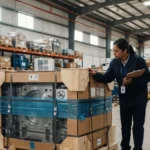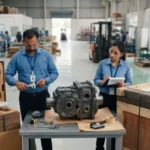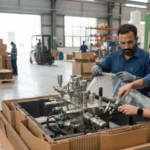
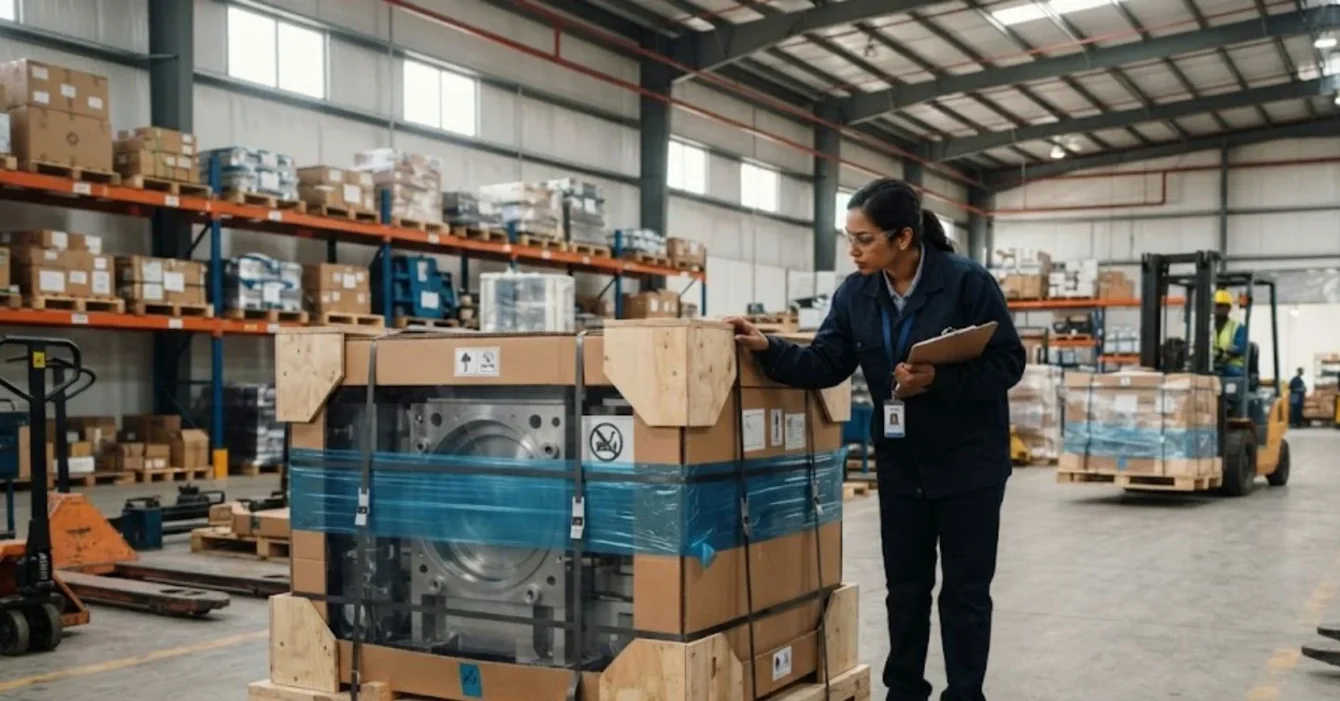
Transit damage can turn a successfully manufactured product into an expensive problem before it even reaches the customer. Scratches, dents, breakage, corrosion, deformation, crushed cartons, and shifted components are common signs that packaging has not been designed for the actual transportation and handling conditions.
For manufacturers, the cost of transit damage goes beyond replacing a damaged product. It can involve rework, delayed deliveries, customer complaints, reverse logistics, production disruption, and loss of confidence.
The good news is that many packaging failures can be prevented.
The key is to understand that industrial packaging is not simply an outer container. It is a protective system designed around the product, its handling requirements, and its supply-chain journey.
Whether you are looking for an industrial packaging solutions company in Delhi NCR, a packaging partner in Faridabad, or a reliable packaging solution company in Delhi, choosing an engineering-led packaging approach can help reduce avoidable transit risks.
Here are five common causes of transit damage and how the right packaging solution can address them.
1. Inadequate Internal Protection
One of the most common causes of transit damage is insufficient protection inside the package.
A strong outer box or wooden crate does not automatically mean the product is protected. If the product can move inside the package, repeated vibration, impact, and sudden movement during transportation can cause damage.
This is particularly important for:
- Automotive components
- Electrical equipment
- Precision-engineered parts
- Solar and renewable energy components
- Metal components with finished surfaces
- Fragile industrial assemblies
During transportation, products may experience vibration from road conditions, sudden braking, acceleration, loading and unloading, and repeated handling.
If there is too much empty space inside the package, the product can shift and strike the internal walls or other components.
How to Prevent It
The internal packaging should be designed around the product.
Depending on the application, this can involve:
- Custom corrugated fitments
- Partitions
- Cushioned supports
- Blocking and bracing
- Die-cut structures
- Protective wrapping
- Product-specific positioning
- Wooden or plywood internal supports
The objective is to keep the product appropriately positioned throughout its journey.
This is one of the key advantages of custom industrial packaging over generic packaging products.
A reliable industrial packaging solutions company in Delhi NCR should evaluate the product dimensions, weight, geometry, fragility, and handling conditions before recommending the internal packaging structure.
2. Poor Load Distribution and Stacking Failure
Industrial products are often transported and stored in stacked configurations.
When the load is not distributed correctly, packages can become unstable or collapse under pressure.
A package may perform perfectly when placed individually but fail when several packages are stacked on top of each other.
Poor load distribution can result in:
- Crushed cartons
- Deformed packaging
- Product damage
- Unstable pallets
- Collapsed stacks
- Difficult forklift handling
- Damage to lower packages
The problem is often not simply the packaging material. It is the structural design.
Why Stacking Design Matters
Packaging needs to consider where the load is transferred.
If the structure is not designed to carry the stacking load, pressure can transfer directly onto the product rather than through the intended structural points.
An engineered packaging system considers:
- Product weight
- Package dimensions
- Stacking height
- Pallet configuration
- Load-bearing areas
- Package orientation
- Transportation conditions
- Warehouse storage requirements
For manufacturers operating in industrial hubs such as Faridabad and Delhi NCR, these factors become especially important because products may move through multiple stages before reaching the customer.
A good packaging solution company in Delhi should therefore look beyond the individual carton or crate and consider the complete load configuration.
3. Incorrect Packaging Material Selection
Not every product requires the same packaging material.
Choosing packaging based only on availability or price can create problems later.
For example, a lightweight corrugated structure may be suitable for one industrial component but completely unsuitable for a heavy engineering assembly.
Similarly, a wooden box may provide excellent structural protection but may not address corrosion or moisture exposure unless the appropriate protective materials are incorporated.
The right packaging material depends on the product and the risks it will encounter.
Corrugated Packaging
Heavy-duty corrugated packaging can be suitable for many industrial components where the packaging needs to balance protection, handling efficiency, storage, and material usage.
It can include:
- Corrugated cartons
- Heavy-duty boxes
- Sleeves
- Die-cut structures
- Partitions
- Internal fitments
Wooden and Plywood Packaging
Wooden and plywood packaging can be appropriate for heavy, oversized, irregular, or high-value products requiring additional structural support.
Applications can include:
- Machinery
- Heavy engineering components
- Industrial equipment
- Large assemblies
- Export shipments
- Heavy loads
Protective Packaging
Some products require protection from environmental conditions rather than impact alone.
VCI materials, moisture barriers, wrapping materials, and surface protection can help address corrosion, contamination, and moisture-related risks.
Complete Packaging Assemblies
In many industrial applications, the best packaging solution combines multiple materials.
For example, a complete packaging assembly could use:
Wooden base + corrugated structure + internal fitments + VCI protection + moisture barrier
This creates a packaging system rather than relying on one material to solve every problem.
This integrated approach is one reason manufacturers increasingly work with engineered industrial packaging solutions providers instead of purchasing packaging components separately.
4. Moisture, Humidity, and Corrosion Exposure
Not all transit damage is caused by physical impact.
Moisture and corrosion can quietly damage industrial products during storage and transportation.
Metal components are particularly vulnerable when exposed to humidity, condensation, rain, or prolonged environmental exposure.
This can become a major concern during:
- Long-distance transportation
- Export shipments
- Sea freight
- Extended warehouse storage
- Monsoon conditions
- High-humidity environments
A product can reach its destination without a visible impact mark and still be unusable because corrosion has affected its surface or functional components.
How Protective Packaging Helps
Depending on the product and application, packaging may incorporate:
- VCI protection
- Moisture barriers
- Protective films
- Wrapping materials
- Desiccant solutions
- Sealed packaging systems
- Appropriate outer packaging
The correct solution depends on the product material, storage duration, transportation method, and environmental conditions.
For manufacturers in Delhi NCR, including industrial areas around Faridabad, Bhiwadi, and other manufacturing clusters, selecting the appropriate protective packaging can help address the environmental conditions products may experience during transportation and storage.
If your product is sensitive to corrosion, protective packaging should be considered during the initial packaging design—not added as an afterthought.
5. Packaging Designed Without Understanding the Supply Chain
Perhaps the biggest cause of transit damage is designing packaging without understanding how the product actually moves.
A package may work perfectly inside a controlled factory environment but fail once it enters the real supply chain.
Think about everything that happens after the product leaves your production line.
It may be:
- Packed at the manufacturing facility
- Moved internally
- Loaded onto a truck
- Transported over uneven roads
- Unloaded at a warehouse
- Stored temporarily
- Loaded again
- Delivered to the customer
- Handled inside the customer’s facility
Every one of these stages creates potential risks.
Questions Your Packaging Should Answer
Before finalizing a packaging design, ask:
- How many times will the package be handled?
- Will forklifts be used?
- Will cranes or lifting equipment be required?
- How high will the packages be stacked?
- How long will the product remain packed?
- Will the shipment travel domestically or internationally?
- Will it be exposed to moisture?
- Does the product need corrosion protection?
- Can the package withstand vibration?
- Are there specific customer handling requirements?
The answers help determine the appropriate packaging structure.
This is why engineered industrial packaging solutions begin with understanding the product and its journey rather than selecting a standard box.
How the Right Packaging Solution Reduces Transit Damage
Preventing transit damage requires a systematic approach.
A packaging partner should ideally follow a process such as:
Understand
Study the product, dimensions, weight, fragility, surface finish, and handling requirements.
Analyse
Evaluate transportation, stacking, storage, environmental exposure, and potential damage points.
Engineer
Develop a packaging structure around the product rather than adapting the product to a generic package.
Prototype
Create a prototype to identify fitment, handling, and structural issues before production.
Validate
Evaluate the packaging against practical handling and transportation requirements.
Manufacture
Produce the packaging consistently according to the approved design.
Deliver
Coordinate packaging availability with the manufacturer’s production and dispatch schedule.
This approach can help manufacturers move from reactive damage control to proactive packaging design.
Why Manufacturers Need an Engineering-Led Packaging Partner
A standard packaging supplier may provide a product that meets a particular size or material specification.
An engineering-led packaging partner looks at the bigger picture.
The focus is not simply:
“Which box should we use?”
The better question is:
“What does this product need to safely complete its journey?”
That difference can have a significant impact on packaging performance.
An experienced industrial packaging solutions company can bring together corrugated packaging, wooden and plywood structures, protective materials, fitments, and complete packaging assemblies based on the application.
This can also simplify procurement for manufacturers that previously had to coordinate several packaging vendors.
Choosing the Best Packaging Solution Company in Delhi NCR
If you are searching for the best packaging solution company in Delhi, best packaging company in Delhi NCR, or an industrial packaging solutions company in Faridabad, avoid evaluating suppliers only on price.
Instead, consider whether the packaging partner can understand your actual product and supply-chain challenges.
Look for:
- Engineering-led packaging design
- Product-specific solutions
- Prototyping capability
- Corrugated packaging expertise
- Wooden and plywood packaging
- Protective packaging solutions
- Export packaging capability
- Consistent manufacturing
- Quality-focused processes
- Ability to manage multiple packaging materials
- Understanding of industrial handling requirements
For manufacturers located in Delhi NCR, having a packaging partner close to major industrial and manufacturing clusters can also make communication, sampling, production coordination, and delivery easier.
Green Packs supports industrial packaging requirements across multiple manufacturing locations, including Faridabad, Bhiwadi, Chennai, Pune, and Jaipur.
Green Packs: Engineered Packaging for Industrial Products
Green Packs approaches packaging as an engineered system rather than a standard commodity.
Our packaging capabilities include:
- Corrugated Packaging Systems
- Wooden & Plywood Packaging
- Protective Packaging
- Complete Packaging Assemblies
We work with manufacturers across automotive and auto components, renewable energy and solar, engineering and capital goods, electrical and industrial equipment, and export-oriented manufacturing.
Whether your challenge is transit damage, product movement, corrosion, stacking failure, or packaging inconsistency, the right solution starts with understanding the product and its journey.
For manufacturers looking for an industrial packaging partner in Delhi NCR, packaging solutions in Faridabad, or an experienced packaging solution company in Delhi, an engineering-led approach can provide a more reliable way to solve recurring packaging challenges.
Conclusion
Transit damage is rarely just a transportation problem.
In many cases, it is a packaging design problem that begins much earlier.
Inadequate internal protection, poor load distribution, incorrect material selection, moisture exposure, and a lack of supply-chain understanding can all contribute to product damage.
The solution is not simply to add more packaging material.
The solution is to engineer the right packaging around the product.
By understanding the product, analysing its transportation journey, selecting the appropriate materials, designing internal protection, validating the structure, and manufacturing consistently, manufacturers can build packaging systems designed for real-world conditions.
If your current packaging is resulting in repeated transit damage, inconsistent protection, corrosion, or excessive packaging costs, it may be time to review the design.
Looking for engineered industrial packaging solutions in Delhi NCR or Faridabad?
Discuss your packaging requirement with Green Packs and develop a packaging solution designed around your product and supply-chain needs.